 Available in US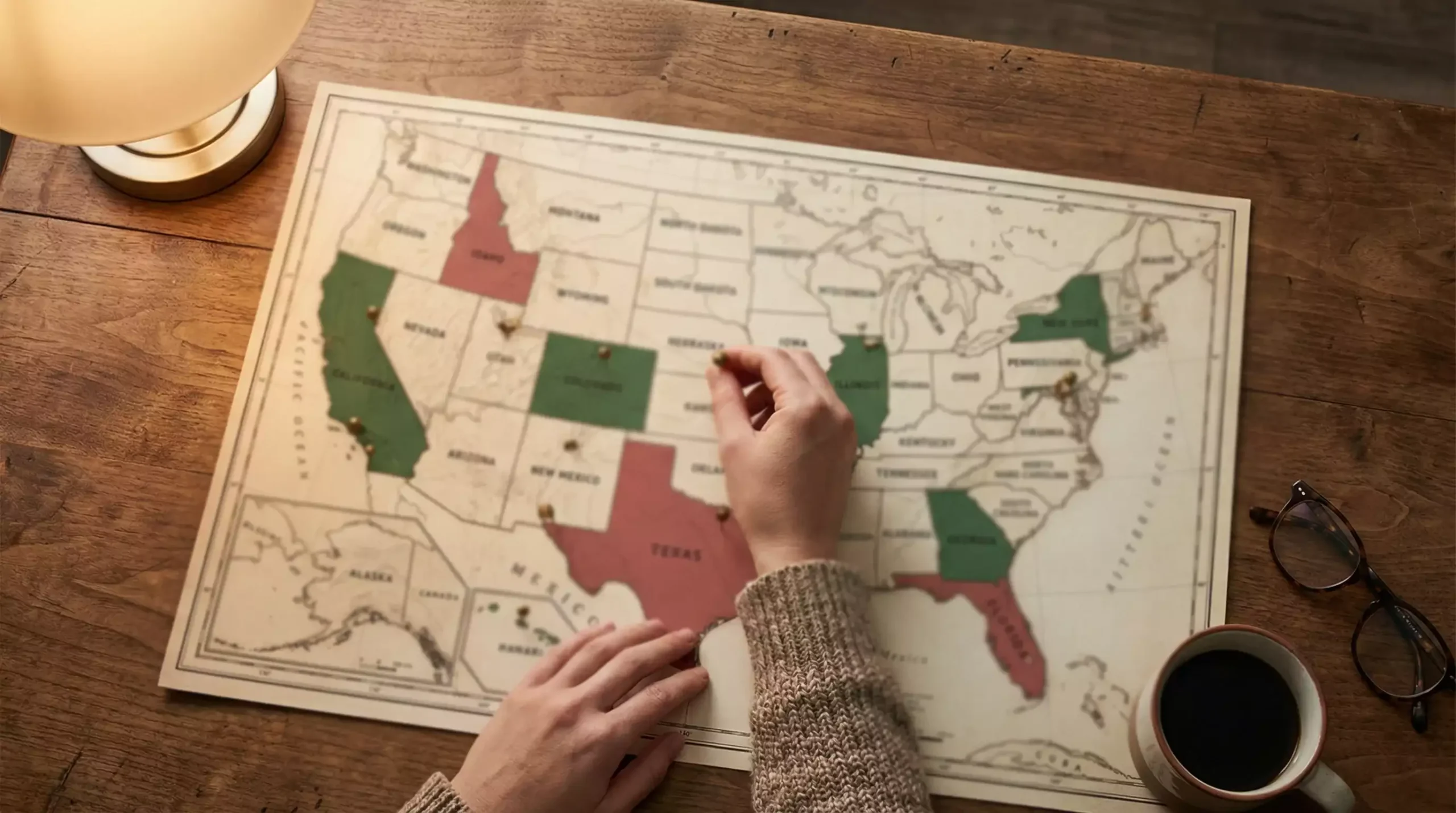
The sweepstakes casino map of the United States looks nothing like its regulated gambling counterpart. While licensed iGaming operates in just seven or eight states, sweepstakes platforms have spread across more than 35 states—a reach that speaks volumes about the legal gray zone these operations occupy.
This disparity isn’t an accident. Sweepstakes casinos have built their business model around a specific interpretation of federal and state laws, one that lets them offer casino-style games with real prize redemptions while technically avoiding classification as gambling. According to KPMG’s 2025 analysis of the sweepstakes industry, this legal positioning has allowed the sector to explode—growing at a compound annual rate of 60 to 70 percent between 2020 and 2024.
But that expansion has triggered a regulatory backlash. Throughout 2025, six states passed legislation specifically banning sweepstakes casinos. State attorneys general from coast to coast have issued cease-and-desist letters, and the legal ground that once seemed solid is shifting beneath operators’ feet. What was permissible in January might be prohibited by December.
This guide breaks down the current legal landscape for sweepstakes casinos across all 50 states. You’ll find which states allow these platforms to operate freely, which have imposed outright bans, and which fall somewhere in the murky middle—states with restrictions, pending legislation, or enforcement actions that create uncertainty for players. The legal framework section explains why sweepstakes casinos claim to be legal in the first place, and what arguments regulators are using to push back.
Understanding where sweepstakes casinos stand legally isn’t just academic. If you’re playing from a state that’s cracking down, you could find your account frozen or your ability to redeem prizes suddenly complicated. The legal sweepstakes states today might not be the legal states tomorrow. This is where things stand in March 2026—though if recent history teaches anything, this landscape will keep shifting.
The Legal Framework Behind Sweepstakes Casinos
The legal argument for sweepstakes casinos rests on a three-part test that distinguishes gambling from legitimate promotional sweepstakes. Under most state laws, gambling requires three elements: consideration (something of value paid), chance (random outcome), and prize (something of value won). Remove any one element, and the activity theoretically stops being gambling.
Sweepstakes casinos attack the consideration element. Their model works like this: players can purchase Gold Coins, which are used for entertainment play only and cannot be redeemed for prizes. When purchasing Gold Coins, players receive Sweeps Coins as a free bonus—and those Sweeps Coins can be redeemed for cash prizes. The legal theory is that since you’re buying Gold Coins (a product with entertainment value) and receiving Sweeps Coins for free, no consideration is paid for the chance to win prizes.
This structure gets reinforced by the alternative method of entry, known as AMOE. Every legitimate sweepstakes casino offers a way to receive Sweeps Coins without any purchase—usually by mailing a request or entering a code. The existence of this free entry option is central to the legal argument. If anyone can enter without paying, the argument goes, then there’s no purchase necessary to play for prizes.
The Unlawful Internet Gambling Enforcement Act of 2006 provides additional cover at the federal level. UIGEA explicitly exempts prize promotions and sweepstakes from its definition of unlawful internet gambling, as long as the outcome is not determined by the results of a sporting event and the opportunity to participate is not linked to purchasing a product or service.
Critics and regulators see these distinctions as legal fiction. “If a game on your phone or computer looks like a casino game, acts like a casino game, and pays out real money winnings like a casino game, then it is a casino gambling game, thus currently illegal and should not operate in New York without proper regulation, safeguards, and accountability,” said Senator Joseph P. Addabbo, Jr., Chair of the New York State Senate Racing, Gaming, and Wagering Committee, when New York’s sweepstakes ban was signed into law.
The debate ultimately comes down to substance versus form. Sweepstakes operators argue their model satisfies legal requirements. Regulators counter that when 90 percent of players view the activity as gambling and 68 percent report that winning money is their primary motivation—statistics from the American Gaming Association’s 2025 survey—the promotional sweepstakes wrapper doesn’t change the fundamental nature of what’s happening.
Neither side has achieved a definitive victory in court, which is why the legal status varies so dramatically from state to state. Some jurisdictions accept the sweepstakes framework; others reject it entirely. Most fall somewhere in between, creating a patchwork where players need to understand their specific state’s position rather than relying on blanket assumptions about legality.
Where Sweepstakes Casinos Are Legal in 2026
As of March 2026, sweepstakes casinos operate with relative freedom in the majority of US states. The KPMG analysis puts the number at 35 or more states where these platforms can accept players without facing explicit legal prohibition. That’s a stark contrast to traditional online gambling—regulated iGaming is legal in just seven to eight states, depending on how you count pending implementations.
The states where sweepstakes casinos face the fewest obstacles tend to share certain characteristics. They either lack specific legislation addressing sweepstakes gambling, have attorney general opinions that tacitly accept the promotional sweepstakes model, or have regulatory frameworks that distinguish between gambling and sweepstakes-based promotions in ways that favor these platforms.
Texas represents a major market where sweepstakes casinos continue to operate. The state has not passed legislation targeting these platforms, and while Texas gambling law is generally restrictive, the sweepstakes model’s argument that no gambling consideration is paid has not been formally rejected. Texas players can sign up, purchase Gold Coins, receive Sweeps Coins, play games, and redeem prizes without running into state-level prohibitions.
Florida operates similarly. Despite having a complex gambling landscape shaped by tribal compacts and specific ballot initiatives, sweepstakes casinos have not been the subject of enforcement actions or legislative bans. The state’s large population makes it a critical market for operators, and the absence of prohibition has allowed the industry to grow there substantially.
Ohio, Pennsylvania, and Illinois—states with regulated sports betting and, in some cases, online casino gaming—have not moved against sweepstakes platforms. The presence of a legal gambling framework doesn’t automatically mean sweepstakes casinos are prohibited; in many cases, regulators have focused their attention on ensuring licensed operators comply with state law rather than pursuing unlicensed sweepstakes sites.
Throughout the South and Midwest, the picture is broadly permissive. States like Tennessee, Missouri, Kansas, and Kentucky have not enacted sweepstakes bans, though Tennessee’s attorney general did issue cease-and-desist letters to approximately 40 platforms in late 2025—indicating that enforcement pressure can exist even without formal legislative prohibition.
The legal status in these permissive states isn’t necessarily permanent. Many legislators have simply not prioritized sweepstakes casinos, either because the issue hasn’t gained political traction or because more pressing matters have occupied their attention. The pattern from 2025 suggests that once a state starts examining sweepstakes casinos closely, regulatory action often follows. Players in currently legal states should monitor their state legislature’s activities, particularly during annual sessions when gambling bills tend to surface.
It’s worth noting that operating legally and operating without controversy aren’t the same thing. Even in states without bans, sweepstakes casinos may face bank processing difficulties, advertising restrictions, or other practical challenges. The legal gray zone extends into operational areas that affect players indirectly—withdrawal delays, for instance, sometimes stem from payment processor hesitation rather than state law.
States That Have Banned Sweepstakes Casinos
The roster of states with explicit sweepstakes casino bans grew significantly in 2025. Six states passed legislative measures specifically targeting these platforms, joining a handful of jurisdictions that had earlier prohibitions in place. For players in these states, the message is clear: sweepstakes casinos are off limits.
California enacted one of the most consequential bans. Assembly Bill 831 took effect on January 1, 2026, making California the largest state to formally prohibit sweepstakes casinos. The stakes were enormous. According to an economic impact study prepared by Eilers & Krejcik Gaming for the Social Gaming Leadership Alliance, California represented 17.3 percent of the entire US sweepstakes market—translating to roughly $2.42 billion in 2025. Operators who had built substantial player bases in the state were forced to exit, and California residents now find themselves blocked from virtually all sweepstakes casino sites.
New York followed a similar trajectory. The state legislature passed S5935A, establishing civil penalties ranging from $10,000 to $100,000 for violations. Attorney General Letitia James had already sent cease-and-desist letters to 26 sweepstakes platforms before the bill passed, and the new law gave her office additional enforcement tools. New York wasn’t as large as California in market terms—Eilers & Krejcik estimated $762 million in sweepstakes sales there in 2024—but its regulatory approach has influenced other northeastern states.
Washington State maintains longstanding prohibitions that predate the recent wave of bans. The state’s gambling laws don’t carve out exceptions for sweepstakes models, and operators have generally avoided the market rather than test the legal waters. Washington players attempting to access sweepstakes casinos typically encounter geoblocking.
Idaho similarly restricts sweepstakes casinos. The state’s constitution contains strict anti-gambling provisions, and the sweepstakes workaround hasn’t found acceptance from regulators there. Players in Idaho face the same reality as those in Washington: most major platforms won’t accept registrations from the state.
Nevada’s situation carries an ironic twist. The gambling capital of the United States actually prohibits sweepstakes casinos—not because Nevada is anti-gambling, obviously, but because the state’s highly regulated gaming framework doesn’t accommodate unlicensed operators. The Nevada Gaming Control Board views sweepstakes casinos as competing with licensed establishments without meeting licensing requirements. If you’re visiting Las Vegas, you can walk into any casino on the Strip, but opening a sweepstakes app on your phone puts you in a legal gray area the state prefers to keep dark.
Michigan has also taken enforcement action. While the state operates legal online casinos through its licensed framework, sweepstakes platforms fall outside that system. The Michigan Gaming Control Board has issued warnings and operators have largely withdrawn from the market.
Players in banned states need to understand that violations can carry consequences beyond simply losing access to their accounts. Some state laws impose penalties on operators rather than players, but creating accounts using VPNs or false location information could constitute fraud—and winnings accumulated under false pretenses may not be legally recoverable. The safest approach in banned states is to look at legal alternatives, which exist in various forms depending on the jurisdiction.
States With Partial Restrictions
Between fully legal and outright banned lies a category of states where sweepstakes casinos face partial restrictions, regulatory uncertainty, or selective enforcement. These states present the most complicated picture for players—platforms might accept registrations, but operational limitations, pending legislation, or attorney general scrutiny create an unpredictable environment.
Montana allows some forms of sweepstakes gaming but imposes restrictions that many major platforms find incompatible with their business models. The state’s video gambling regulations create a framework that doesn’t neatly accommodate online sweepstakes operations, leading some operators to exit the market voluntarily rather than navigate the compliance requirements.
South Carolina presents a different kind of ambiguity. The state has a history of enforcement actions against physical sweepstakes gaming establishments—the internet café-style operations that proliferated before online platforms became dominant. Whether those precedents apply to online sweepstakes casinos using the dual-currency model remains unclear. Some platforms accept South Carolina players; others don’t.
Arizona issued more than 100 cease-and-desist letters to sweepstakes operators in 2025, part of a broader enforcement push documented by iGamingBusiness. These letters don’t constitute a legislative ban, but they signal that the state’s attorney general views sweepstakes casinos unfavorably. Operators receiving such letters face a choice: withdraw from Arizona or risk legal action. Many have chosen the former, making Arizona a state where availability varies significantly by platform.
Louisiana’s Gaming Control Board has similarly pursued enforcement without formal legislative prohibition. The board sent 40 cease-and-desist letters to operators it characterized as conducting illegal gambling. Louisiana’s regulated gaming industry includes riverboat casinos and land-based establishments, and regulators appear to view sweepstakes platforms as unauthorized competition rather than legitimate promotional activities.
Georgia occupies uncertain territory. The state’s constitution prohibits casino gambling, and some interpretations would extend that prohibition to sweepstakes casinos. However, the state has not mounted the kind of comprehensive enforcement campaign seen in Arizona or Louisiana, and many platforms continue to accept Georgia players. Legislative efforts to clarify the law have surfaced periodically without gaining traction.
The practical reality in these restricted states is that player experience can vary substantially. One platform might operate freely while a competitor blocks the state entirely. Withdrawal processing may take longer as payment processors navigate the uncertain regulatory terrain. Customer support responses about specific states often boil down to variations of “we’re monitoring the situation.”
For players in these jurisdictions, due diligence becomes especially important. Checking whether a specific platform accepts players from your state before depositing, understanding that the situation could change, and keeping withdrawal requests relatively current rather than letting large balances accumulate—these practical steps help manage the risks of playing in a legally uncertain environment.
Recent Legislative Actions Against Sweepstakes Casinos
The legislative landscape for sweepstakes casinos shifted dramatically in 2025. After years of operating with minimal regulatory interference, the industry faced a coordinated pushback from state lawmakers, attorneys general, and established gambling interests. Six states enacted bans that year, and enforcement actions multiplied across jurisdictions that stopped short of formal prohibition.
California’s AB 831 represented the highest-profile legislative action. The bill worked its way through the state assembly with support from tribal gaming interests and the California Nations Indian Gaming Association. Tribal casinos in California generate billions in revenue and employ tens of thousands of workers; tribal leadership argued that sweepstakes casinos were siphoning customers without contributing to the state’s regulatory framework or tribal economic development. Governor Gavin Newsom signed the bill on October 11, 2025, with the ban taking effect at the start of 2026.
The California Senate’s analysis of AB 831 detailed the legal theory behind the prohibition. The analysis characterized sweepstakes casinos as operating gambling operations while claiming immunity through promotional sweepstakes structures—exactly the argument regulators have made in other states. The bill defined covered activities broadly, capturing not just sweepstakes casinos but similar operations that might try to use different terminology to escape the ban.
New York’s action came through S5935A, which sailed through both chambers with bipartisan support. Senator Addabbo, who chairs the state’s gaming committee, framed the legislation as necessary consumer protection. New York already has a robust framework for legal gambling, including commercial casinos, tribal gaming, and state-regulated online sports betting. Adding sweepstakes casinos to that framework wasn’t the goal; removing them from operation entirely was.
Tennessee’s attorney general pursued a different route. Without waiting for legislative action, AG Jonathan Skrmetti sent cease-and-desist letters to approximately 40 sweepstakes platforms in late 2025, arguing they violated existing state gambling law. “The only thing you can be sure about with an online sweepstakes casino is that it’s going to take your money,” Skrmetti said in announcing the enforcement action. “They work hard to make these sweepstakes casinos look legitimate, but at the end of the day they are not.”
The coordinated nature of the 2025 crackdown reflected alliance-building among industry groups and legislators. The American Gaming Association, representing licensed casinos and sportsbooks, published research highlighting that 90 percent of sweepstakes players consider the activity to be gambling—data intended to undercut the promotional sweepstakes framing. The National Council of Legislators from Gaming States provided a forum for lawmakers from different jurisdictions to share approaches and model legislation.
Looking ahead to 2026 and beyond, additional states seem likely to join the prohibition column. Bills have been introduced or discussed in several jurisdictions where sweepstakes casinos currently operate. The industry’s defenders point to the jobs and tax revenue operators generate; critics counter that those benefits flow to private companies while regulated competitors fund state programs and meet consumer protection requirements. That debate will play out in state capitals across the country throughout the current legislative season.
State-by-State Notes for Players
The following overview covers states with notable situations that don’t fit neatly into the legal, banned, or restricted categories. Players should treat this as current information that may change—sweepstakes casino legality is a moving target.
Alabama’s gambling laws are conservative, and the state has historically resisted gambling expansion. However, sweepstakes casinos have not been specifically targeted by legislation or attorney general action. Most platforms accept Alabama players, though the absence of explicit permission means the situation could change quickly if regulators turn their attention to the industry.
Alaska presents minimal barriers to sweepstakes casino play. The state’s small population means it’s rarely a priority for operators or regulators, and players generally encounter no issues accessing major platforms.
Colorado has legal sports betting and a well-developed casino industry, but sweepstakes platforms exist alongside those regulated options. The state hasn’t moved against sweepstakes operators, possibly because the regulated industry hasn’t pushed for action with the same intensity seen in California or New York.
Connecticut’s tribal gaming compacts create a complex environment. The Mohegan and Mashantucket Pequot tribes operate substantial gaming operations, and online gaming in the state is tied to those compacts. Sweepstakes casinos exist in a gray area—not explicitly banned, but not acknowledged within the state’s gaming framework either.
Delaware’s small size and existing online gambling infrastructure means sweepstakes casinos compete directly with state-sanctioned options. The state hasn’t prohibited sweepstakes platforms, and players can access most major sites.
Hawaii prohibits nearly all forms of gambling, and sweepstakes casinos are effectively unavailable there. The state’s geographic isolation and strong anti-gambling cultural sentiment make it an unlikely candidate for future liberalization.
Indiana allows sweepstakes casinos despite having a regulated casino and sports betting market. The coexistence reflects a pragmatic approach—or simply a lack of legislative prioritization of the issue.
Iowa similarly permits sweepstakes play alongside regulated options. The state’s racing and gaming commission focuses on licensed operations, leaving sweepstakes platforms in an unregulated but not prohibited status.
Maryland’s substantial gaming industry, including the MGM National Harbor and several other major casinos, has not prompted sweepstakes-specific legislation. Players can access most platforms without issues.
Massachusetts implemented legal sports betting in 2023 and continues to develop its gaming framework. Sweepstakes casinos operate there, though the state’s active approach to gambling regulation means future restrictions remain possible.
Minnesota has a complex tribal gaming landscape, but sweepstakes casinos haven’t faced opposition at the state level. Players can access major platforms.
New Jersey, despite being one of the first states to legalize online casino gambling, hasn’t prohibited sweepstakes platforms. Players there have access to both regulated options and sweepstakes alternatives, though the regulated market is generally considered safer given New Jersey’s consumer protection requirements.
Oregon permits sweepstakes casino play. The state’s lottery commission operates its own online gaming options, but hasn’t sought to exclude sweepstakes competitors.
Rhode Island and West Virginia, both with legal online casinos, allow sweepstakes platforms to operate alongside regulated options. The coexistence suggests these states distinguish between regulated gambling and sweepstakes promotions, at least for now.
Alternatives for Players in Banned States
If you’re in California, New York, Washington, Idaho, Nevada, or another state where sweepstakes casinos are prohibited, you’re not entirely without options. The alternatives depend on what aspect of sweepstakes casinos appealed to you in the first place.
For players who want casino-style games with real money on the line, licensed online casinos may be available depending on your state. New Jersey, Pennsylvania, Michigan, West Virginia, Connecticut, and Delaware all have legal online casinos with proper regulatory oversight. If you’re in one of these states and previously used sweepstakes platforms, shifting to a regulated site gives you access to similar games with the added protection of state licensing requirements, including game fairness testing and dispute resolution mechanisms.
Social casinos offer another path. These platforms provide casino games without any real-money prize redemption—you play with virtual currency that has no cash value. The games themselves are often identical to what sweepstakes casinos offer; the difference is that winning means accumulating virtual coins rather than redeemable prizes. For players who enjoy the gaming experience without prioritizing prize redemption, social casinos provide that entertainment without legal complications.
Free-to-play mobile games with casino themes are abundant in app stores. Games like slots, poker, and blackjack variations are available from numerous publishers, usually with advertising-supported or optional in-app purchase models. The gameplay may be less sophisticated than dedicated sweepstakes platforms, but the legal simplicity is undeniable.
Tribal casinos remain accessible in most states, including several where sweepstakes casinos are banned. California’s tribal gaming industry is one of the largest in the country, and the tribes that pushed for the sweepstakes ban continue to operate extensive casino properties. Nevada’s situation requires no explanation—physical casinos are everywhere. Washington State has dozens of tribal casinos. If in-person gaming appeals to you, these venues offer slot machines, table games, and poker rooms that sweepstakes casinos attempted to replicate online.
Daily fantasy sports, where legal, provides competitive gaming with prize pools. Unlike traditional gambling or sweepstakes gaming, DFS contests are built around sports knowledge and roster construction. The skill element differentiates DFS from pure chance-based gaming, and many states permit DFS operators that would prohibit sweepstakes casinos.
Lottery games remain available in nearly every state. The prizes tend to follow different structures than sweepstakes casino play, but state lotteries offer legitimate prize opportunities with proceeds supporting public programs. Online lottery ticket purchases are expanding in some states, bridging the gap between traditional retail lottery sales and digital gaming.
The reality for players in banned states is that the sweepstakes casino model—free-to-play games with prize redemption built on the dual-currency structure—simply isn’t available. That specific combination of features requires operating in the legal gray zone that your state has decided to close. The alternatives either move toward pure entertainment without prizes, fully regulated gambling with appropriate licensing, or different gaming formats entirely.